
Harmony Begins on the Inside
Emotional Health as the Path to Authentic, Connected Living
Malcolm Lazenby Co-Founder· Global Leadership Foundation
What if the Harmony we seek in our communities is not built outward from scratch, but cultivated from a place we already carry within us?
Starting with Joy
Peace, Harmony and Joy (PHJ) names something most of us recognize immediately. At Global Leadership Foundation, we approach these three not as a sequence but as an integrated, mutually reinforcing whole. And we tend to start with Joy, not as the reward at the end of the journey, but as the intent that guides it.
Peace - Harmony - Joy co-arising, mutually reinforcing
Thinking with the Whole Self
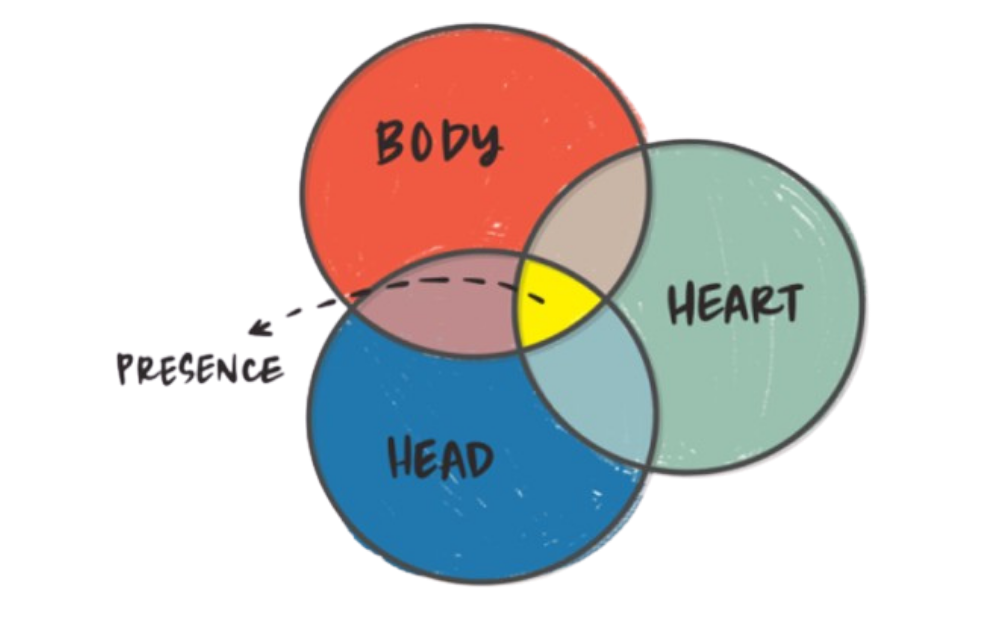
Three centres of whole body thinking — Body · Heart · Head & Presence
The Choice that Makes Harmony Possible
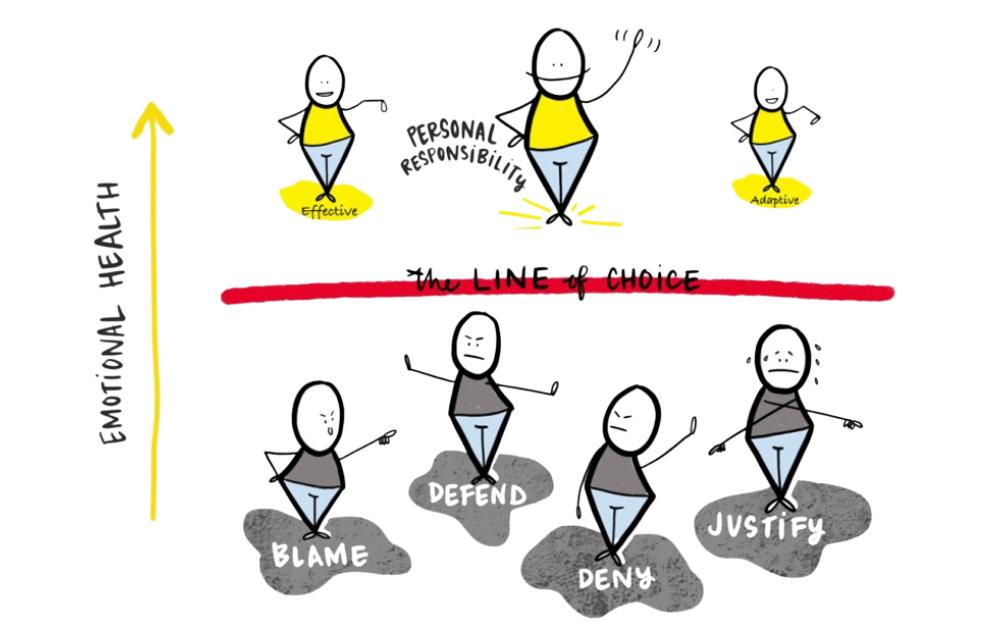
The line of choice — above (personal responsibility) / below (automated response)
Wellbeing at the Societal Level
Think of emotional health as a field that radiates outward. When an individual develops presence and the capacity to respond rather than react, they become a different kind of presence in every system they inhabit, whether that is in a family, team, organisation, community. Their reduced self-centredness creates space for others to be genuinely seen. Communities that orient toward Joy, naming it explicitly as what they are building together, find that Peace and Harmony emerge not as preconditions, but as companions on the journey.
“The inner work is the outer work. They are, in the end, the same work.”
Malcolm Lazenby
Global Leadership Foundation
globalleadershipfoundation.com
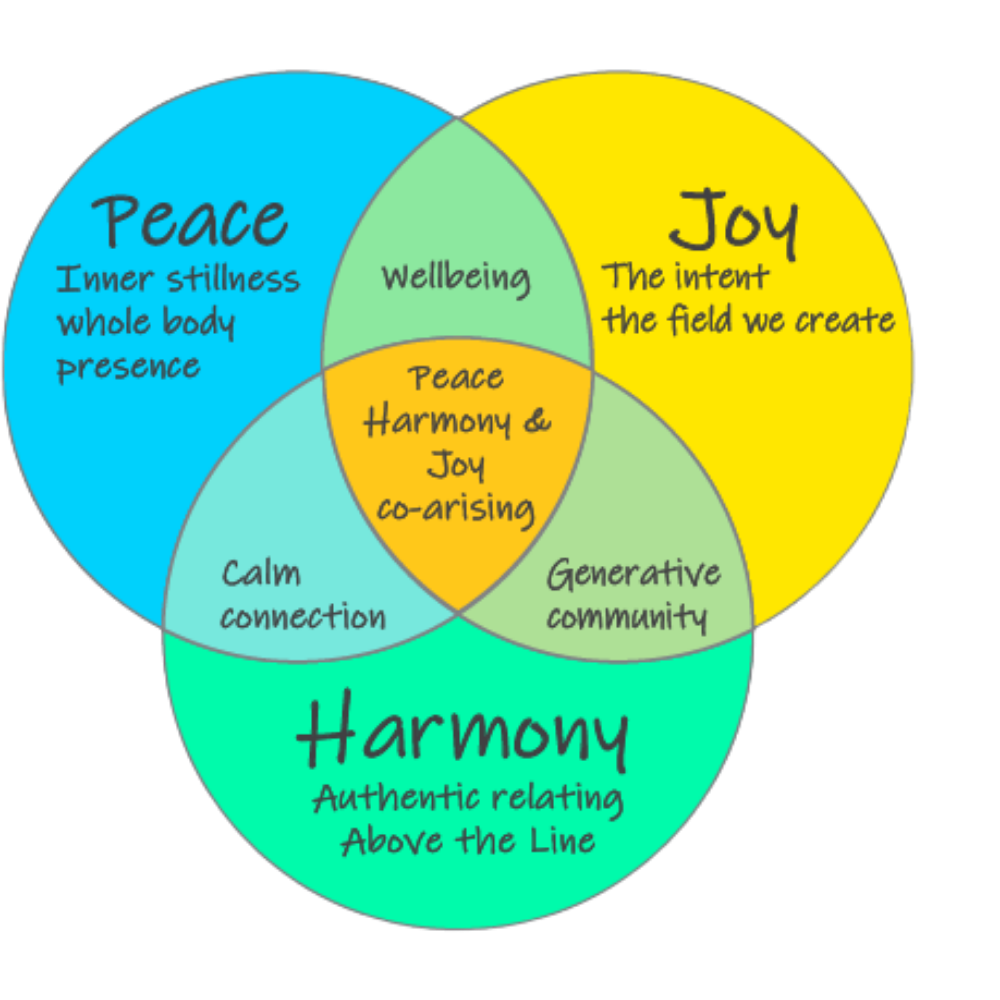
When we hold Joy as our intent, we are more willing to do the inner work that builds Peace. That Peace makes us more capable of genuine Harmony with others. And real Harmony generates more Joy. Each calls forth the others.
One foundation of emotional health is learning to think with the whole body, that is, balancing three centres: Body (instinct, gut feel), Heart (feelings, intuition), and Head (knowledge, insight). When all three are in balance, we enter a state of presence, fully available to the moment and to the people around us. Presence is the experiential ground of inner Peace, and the precondition for authentic living.
Genuine Harmony requires personal responsibility for the way we show up. In our work, we draw a line of choice between automated responses: blaming, defending, denying, justifying and the more emotionally healthy option of a thoughtful, constructive, adaptive and effective response. Above the line sits personal responsibility: not for everything that happens to us, but for how we choose to respond. Every moment we choose above the line is a small act of peace-making, with ourselves and with the world.